
There is no shortage of Jewish representation in mainstream American popular culture, from the novels of Philip Roth to “The Big Lebowski” to Drake’s bar mitzvah sketch on “Saturday Night Live” to “The Marvelous Mrs. Maisel.” And on and on.
What about Hebrew Israelites?
Here is an incomplete list of the American and Israeli films, TV shows, and music I have come across that feature Hebrew Israelites or were inspired by their beliefs. In these works of art, Israelites are presented in a variety of lights, from reverential to mocking. One could argue that being sent up in pop culture is a sign that you’ve made it, that people are actually paying attention to what you’re saying—just ask the Mormons.
I will update the list as I learn about other stuff; suggestions are welcome in the comments.
“The Angel Levine” / Jan Kadar, director / 1970
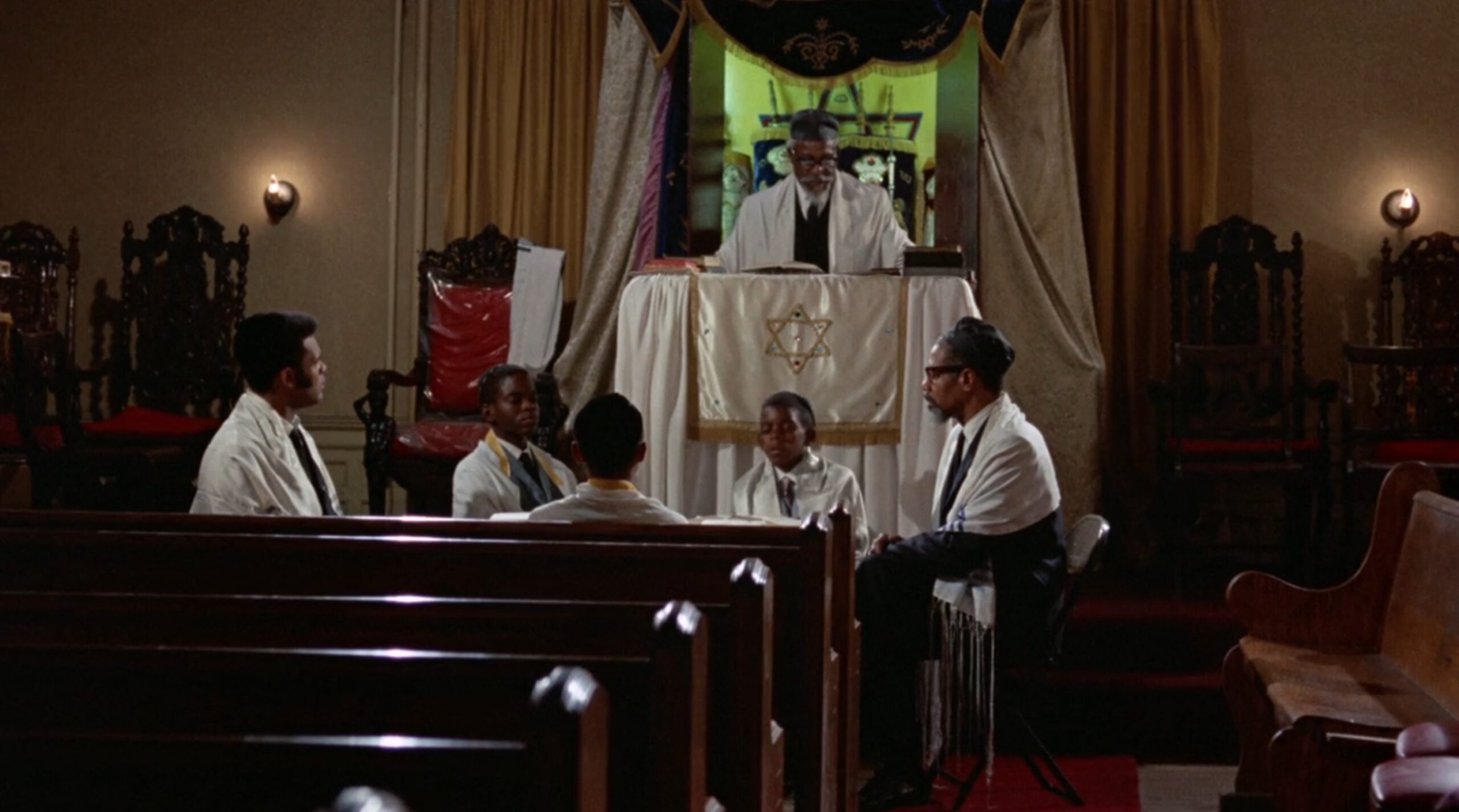
At the end of this New York City drama about race and faith, Morris Mishkin (the great Zero Mostel) wanders around Harlem looking for a mysterious man (the late Harry Belafonte) who showed up in his kitchen the night before, claiming to be a Jewish angel sent by God to help him at a time of need.
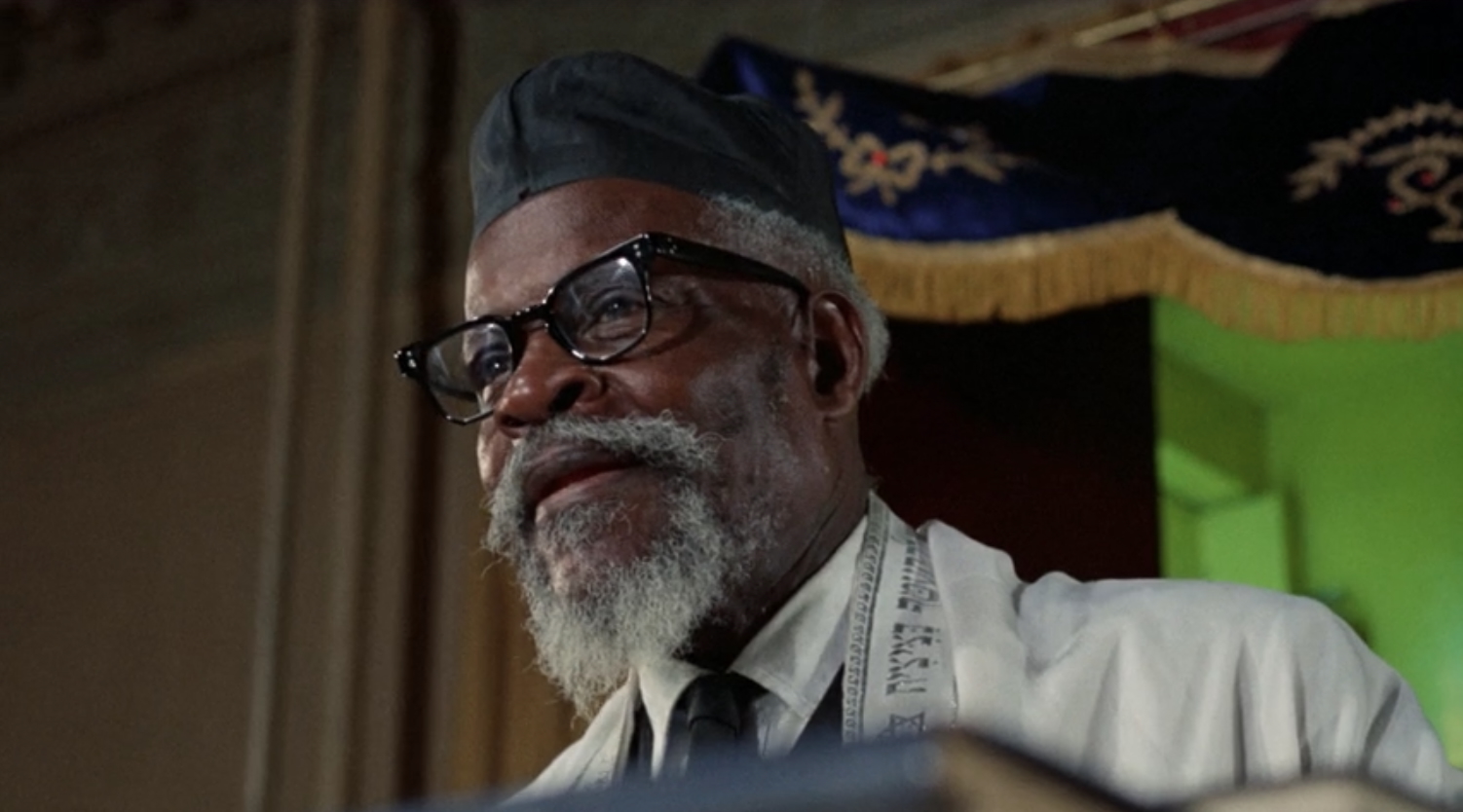
Mishkin’s search leads him to a real Black synagogue, the Commandment Keepers Ethiopian Hebrew Congregation. Inside he observes the synagogue’s founder, Rabbi Wentworth Arthur Matthew, teaching a class to a group of men and boys wearing kippot and prayer shawls.
The Commandment Keepers was one of the largest and most influential Black synagogues in the country before it closed in 2007. “Thousands of Israelites passed through its doors and almost every black rabbi in America owes his existence to its presence,” wrote Rabbi Sholomo Ben Levy. In “The Angel Levine,” the Slovak Jewish director Jan Kadar paid quiet tribute to Matthew and his congregation.
Watch the movie for free on Tubi.
“Black Moses” / Isaac Hayes / 1971
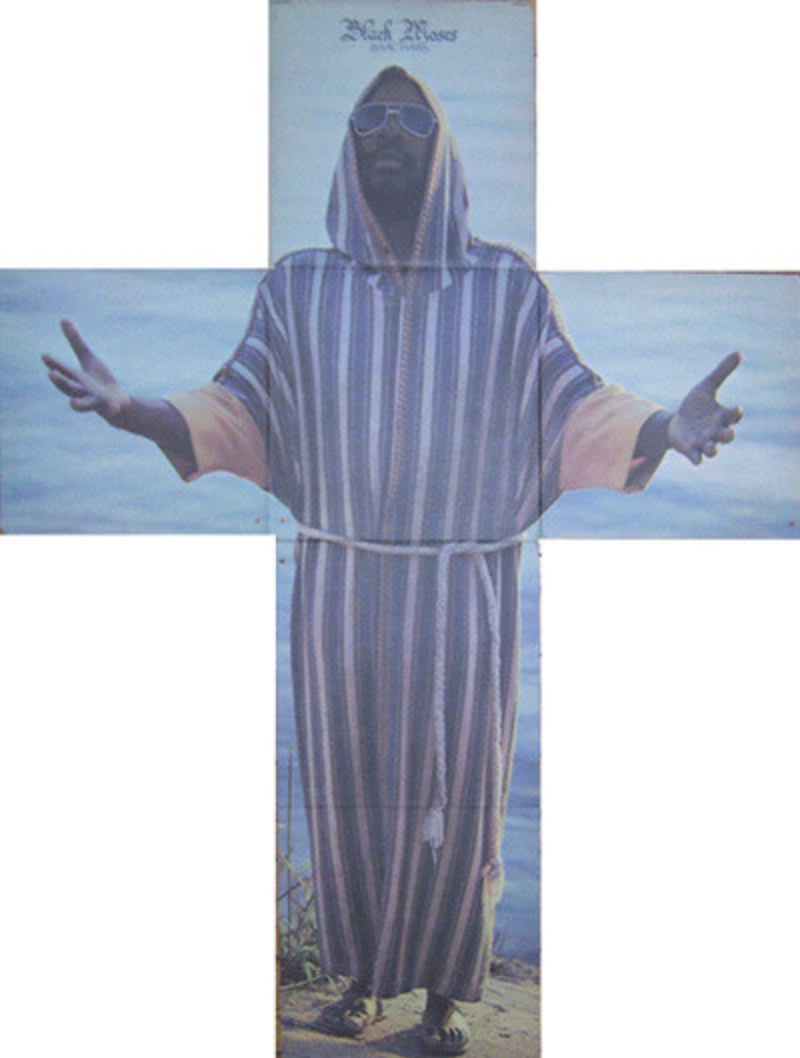
Less than a year after releasing “Shaft,” soul singer Isaac Hayes dropped the double album “Black Moses.” The LP has a special gatefold cover that unfolds to reveal a photo of Hayes standing near a body of water (the Red Sea?) and dressed in a robe and sandals, à la the original Moses.
In the liner notes, Chester Higgins of Jet magazine relates Hayes’ life story in vaguely Biblical prose. Higgins refers to Hayes as a prophet and to Black people as the “chosen people” several times. He concludes by writing: “Black Moses of the famous ‘Memphis Sound’ is indeed a soulful prophet of the Chosen People, a willing servant of the Lord, and one helluva entertaining genius, to boot.”
As for the music, it’s mostly covers and love songs, with no Hebrew Israelite messaging. Hayes was Christian and, later, a Scientologist. He died in 2008 at the too young age of 65.
Listen to the album on Spotify or Apple Music.
“חמש מאות אלף שחור” (“500,000 Black”) / Shaike Ophir / 1977
Members of the African Hebrew Israelites of Jerusalem appeared in this Israeli comedy, which was written and directed by Shaike Ophir, a celebrated mime artist. It’s about two hustlers (Ophir and Jacques Cohen) who find themselves in debt to the Mafia after staging a failed production of “Waiting for Godot.” They go on the run and end up in Dimona, where they find refuge with the Hebrews.
I learned about the film from a 1977 Jerusalem Post article and am trying to track down a copy. I will update this section after I’ve seen it.
“Louis Theroux’s Weird Weekends” / Louis Theroux / 1999
British journalist Louis Theroux is known for exploring subcultures in TV shows and films. In this episode of his “Weird Weekends” documentary series, he meets with elders of the Israelite School of Universal Practical Knowledge (ISUPK).
At ISUPK headquarters in Harlem, Chief High Priest Yeshaya insists that ISUPK is not a Black supremacist group. “We are a so-called religious/spiritual group that believes totally, wholeheartedly, in the Bible,” he tells Theroux. He then goes on to inform Theroux that many white historical figures were actually Black, including King George III (“a light-skinned Black man”), Beethoven, and Shakespeare (“undoubtedly Black!”). Theroux’s befuddlement was, no doubt, shared by many viewers.
Watch the full episode here or on the BBC website.
“The Boondocks” / Aaron McGruder / 2005
The first episode of this provocative animated series from Aaron McGruder begins with a scene that, to my mind, is Hebrew Israelite coded. Huey Freeman, who is around 10 years old, has a dream in which he steps up to the microphone at a garden party and lays “the truth” on the mostly white crowd: “Jesus was Black, Ronald Reagan was the devil, and the government is lying about 9/11.”
Hebrew Israelites are not the only ones who believe that Jesus was Black, of course. But the packaging of this idea with the white-man-is-the-devil trope and the 9/11 conspiracy theory feels like an allusion to radical Black Israelism.
There is an even more explicit allusion to Black Israelism in the episode titled “The Passion of Reverend Ruckus.” Eager to be accepted into “white heaven,” Uncle Ruckus, who is Black, adopts the persona of a white supremacist street preacher who asserts that Black people are “cursed.” Many Israelites actually believe that God cursed Black people for disobeying divine law.
In another notable Season 1 episode, “A Huey Freeman Christmas,” Huey writes and directs a Christmas play at his school in which all of the actors appear to be Black. When the principal tells Huey that Jesus can’t be Black, he replies, “In addition to Arabs, the Middle East has always had many people of African descent whom you would consider Black.”
Watch the series on HBO Max.
“Tell Me When To Go” / E-40 / 2006
This is probably the most popular song to make direct mention of the Hebrews. In the first verse, E-40 draws a direct link between the Israelites of old and modern-day Black people:
Ooh! Jesus Christ had dreads, so shake ’em
I aint got none but I’m planning on growing some
Imagine all the Hebrews going dumb
Dancing on top of chariots and turning tight ones
It’s unclear if 40 Water identifies as a Hebrew himself. The East Bay Express reported in 2017 that he “has always been a devout Christian.”
“King Judah” / Chingy / 2013
St. Louis rapper Chingy started identifying as a Hebrew Israelite around 2013, and “King Judah” is a proclamation of his new faith:
Guess I should talk about, bottles, girls, the hood and guns
I’ve gotten sick of that, you son of sin, I’m God’s Son
Throw up yo’ number ones, and rep that seven with me
New year for new light and new life where can’t no hater get me
Chingy was influenced by the Dallas-based Hebrew Israelite group called Gathering of Christ Church, according to researcher Vocab Malone. Vocab identified the preacher’s voice in the clips at the beginning and end of “King Judah” as that of Elder Rawchaa Shayar of GOCC. He also identified the book in the music video as “The Truth, the Lie, and the Bible” by Elder Shadrock Porter of Israelite Nation World Wide Ministries in Toronto.
In a 2022 VladTV interview, Chingy said he doesn’t identify as a Hebrew Israelite anymore.
“Black Scientologists” / Eric Andre / 2013
This wild sketch from “The Eric Andre Show” pokes fun at both the confrontational Hebrew Israelite street preachers one finds in Times Square and at the Church of Scientology. Although this is satire, one could imagine the Israelites in Louis Theroux’s documentary confidently declaring that L. Ron Hubbard was, in fact, a Black man.
In a 2020 interview, Andre (who is Black and Jewish!) explained how the sketch came to be: “Any comedian, Black or white, that walks past them has to satirize it. They’re dressed like the foot-soldiers from the Ninja Turtles. They hate every single person that isn’t them. It’s just, what do you want from us?”
If you’re wondering if any Black people actually belonged to the Church of Scientology, the answer is: Yes, Isaac Hayes (see above).
“Barry” / Adam Mansbach, screenwriter / 2016
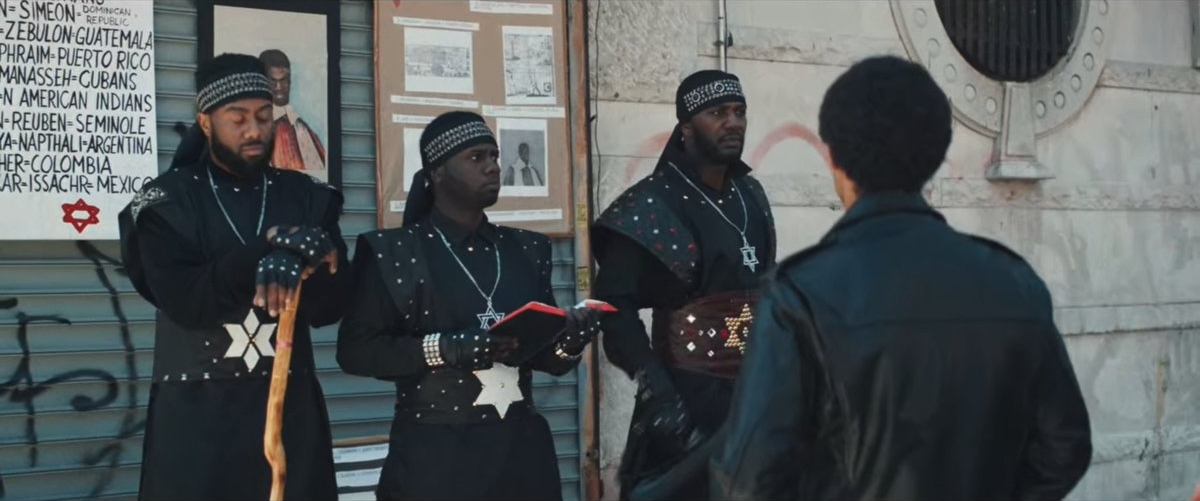
In the 2016 Netflix Barack Obama biopic “Barry,” a young Barack Obama spars with some ISUPK-styled Hebrew Israelite street preachers in New York City.
He challenges the Israelites on their use of the King James version of the Bible. “I thought King James was a white devil,” he says. The preacher turns and points to a painting hanging behind him of King James depicted as a Black man. “He looks like Billy Dee Williams if you ask me,” he responds. LOL.
Next to the painting is the 12 Tribes Chart, a real document that some Israelite groups use as part of their recruitment efforts.
Adam Mansbach, who wrote the script, told me, “That scene wasn’t based on research. It’s just some real New York shit.”
“Hunting the White Devil” / Jamali Maddix / 2017
Nearly 20 years after Louis Theroux visited ISUPK headquarters, another British TV host, comedian Jamali Maddix, spent time with group members in different states.
On an episode of his Viceland show “Hate Thy Neighbor,” Maddix attends a class taught by the group’s leader, Commanding General Yahanna, in Harlem; observes ISUPK street preachers in D.C.; and shoots guns at an indoor range in Philadelphia with Yahanna and others. These scenes are interspersed, “Seinfeld”-style, with clips of Maddix doing stand-up about the Israelites (“They look like the bad guys in wrestling, but you still root for them”).
What struck me about the episode was that, unlike Theroux, Maddix was able to cut through the caricature and show a more human side to the group. One member, General Mahayaman, testifies that he turned his life around after joining ISUPK. Did the fact that Maddix has Jamaican ancestry help him gain their trust? It probably didn’t hurt.
In summarizing the time he spent around ISUPK, Maddix admits that he was “kind of down” with the group. “They nearly got me,” he says. “But the problem I had with the Black Israelites is that they’re waiting for Jesus to come back. Jesus ain’t coming back.”
“DAMN.” / Kendrick Lamar / 2017
This Grammy-winning album is famously full of Hebrew Israelite doctrine. On “DNA.”, Kendrick raps that he has “royalty” in his DNA and compares himself to Yeshua, aka Jesus. On “YAH.” (which is a Hebrew name for God), he declares:
I’m a Israelite, don’t call me Black no mo’
That word is only a color, it ain’t facts no mo’
Later in the verse he references the curses in the book of Deuteronomy, which Israelites often cite as “proof” that Black people are God’s chosen people.
Kendrick’s spiritual awakening was apparently influenced by a cousin, Carl Duckworth, who identifies as an Israelite and goes by the name Karni Ben Israel. At the end of “FEAR.” Lamar includes a snippet of Duckworth sharing a teaching via voicemail:
Until we come back to these laws, statutes, and commandments
And do what the Lord says, these curses is gonna be upon us
We gonna be at a lower state in this life that we live
Here, in today, in the United States of America
I love you, family, and I pray for you
God bless you
Shalom
Listen to the album on Spotify or Apple Music.
“First Day Out” / Kodak Black / 2017
2017 was a big year for Israelite rappers. A couple months after “DAMN.” came out, Kodak Black dropped a track titled “First Day Out” in which he, too, included a verse about being an Israelite. In the music video, he puts a gold Star of David chain around the neck of a young boy, possibly his son.
Kodak studied with an Israelite teacher while he was serving time in a Florida prison. The teacher, known as Priest Kahan, leads a messianic South Florida congregation called Thee Light of Zion.
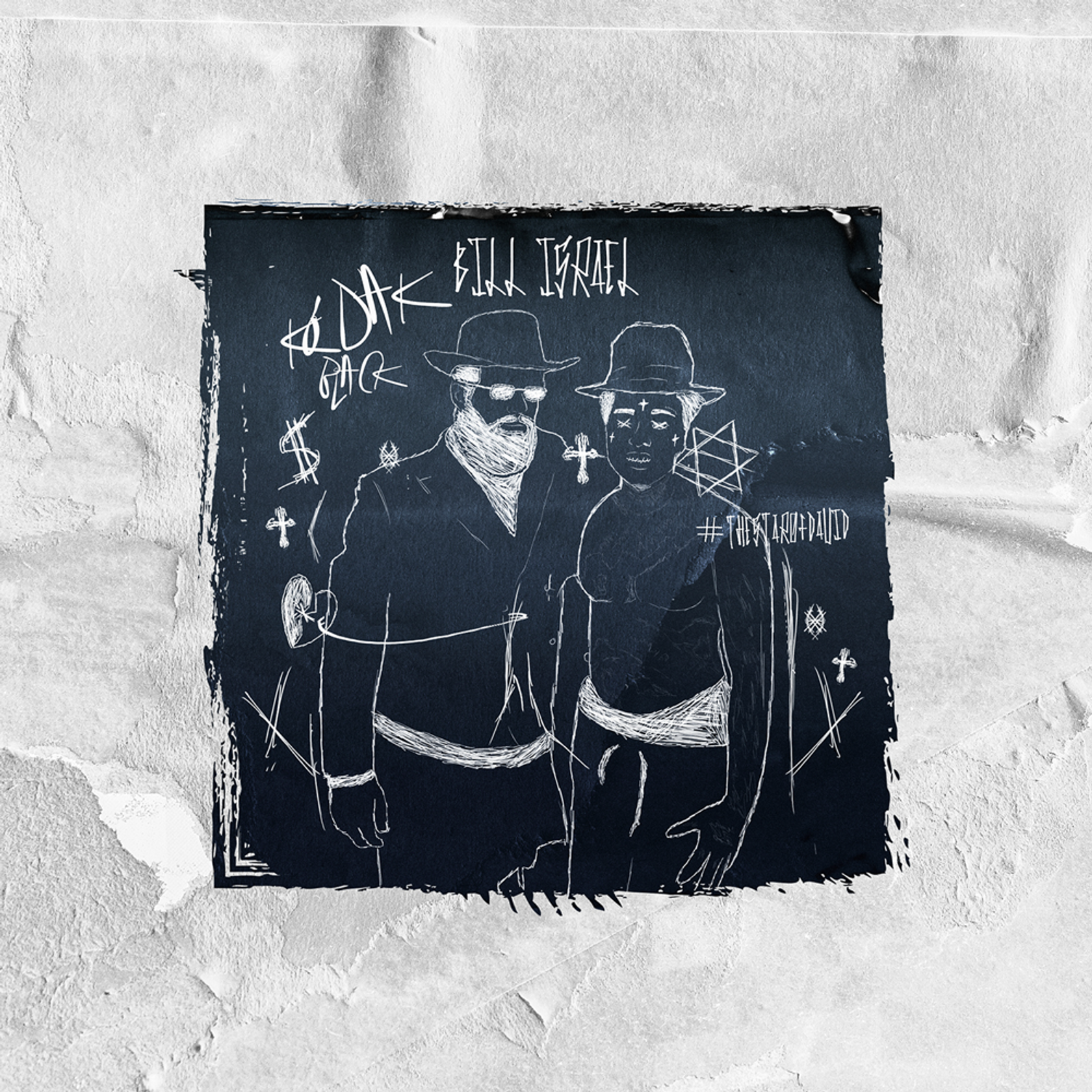
In 2020, Kodak released his third studio album, titled “Bill Israel.” The album cover includes a drawing of two figures standing together—one appears to be Kodak with a Star of David over his shoulder, and the other resembles a Hasidic man. Both are wearing fedoras. I didn’t pick up on any Israelite teachings in the album’s 11 songs.
“The Shocking Vegan Village!” / Nas Daily / 2019
Popular Israeli Arab YouTuber Nuseir Yassin, aka Nas Daily, visited the African Hebrew Israelites’ village in Dimona and spoke with community members about their lifestyle and vegan diet. His video, which went viral, is characteristically over-the-top. At one point, he gushes, “These people are stronger, healthier, and live longer!” Than whom? He doesn’t say.
Some of the African Hebrews who appear in the video are “Queen Mother” Kaninah Baht Israel (99 years old) and Nasik (“Prince”) Gavriel HaGadol (82), along with Rofeh (“Doctor”) Yehoshua Ben Israel and Acote (“Sister”) Ahmahlyah Eshet Elyahshuv.
Other influencers who have filmed videos at the Village of Peace include Montana Tucker, Zach Sage Fox, and Yirmiyahu Danzig.
“The Book of Clarence” / Jeymes Samuel, director and screenwriter / 2024
This film literalizes a core Hebrew Israelite tenet—that the ancient Israelites were Black. The trailer had many people, including me, wondering if there would be any Israelite doctrine woven into the story of messiah wannabe Clarence (played by the great Lakeith Stanfield, who has a Star of David tattoo on his arm in real life). Someone asked on Reddit: “Is the Book of Clarence movie a Hebrew Israelite film?”
Having seen the movie, I think it would be a stretch to call it a “Hebrew Israelite film.” But unapologetically pro-Black? Definitely.
Watch the movie on Netflix.
“Those Spiritual Dudes” / Druski / 2025
Taking a cue from Eric Andre, the comedian Druski filmed a skit on the streets of Atlanta in which he and a few friends heckle passersby while dressed in the distinctive purple and gold color scheme of Israel United in Christ (IUIC), a “radical” Israelite group based in New York.
The skit is honestly pretty lame. It mostly consists of Druski and his friends shouting “That’s right!” over and over again. I wasn’t going to add it to this list, but what is remarkable about the video is that within 24 hours it has already racked up 17 million views on X, plus another 12 million on Instagram and 2 million on TikTok. This silly skit is quite possibly the single most viewed piece of content about Hebrew Israelites to date, for better or worse. (IUIC responded with a video promoting its educational and community programs and encouraging people to join the group.)
The skit has echoes of a stand-up bit by Mycal Dédé.
Updated on 11/1/25 to add the “Hate Thy Neighbor” episode and on 10/30/25 to add Druski’s skit. Thank you to Vocab Malone for bringing “Hate Thy Neighbor” to my attention.