
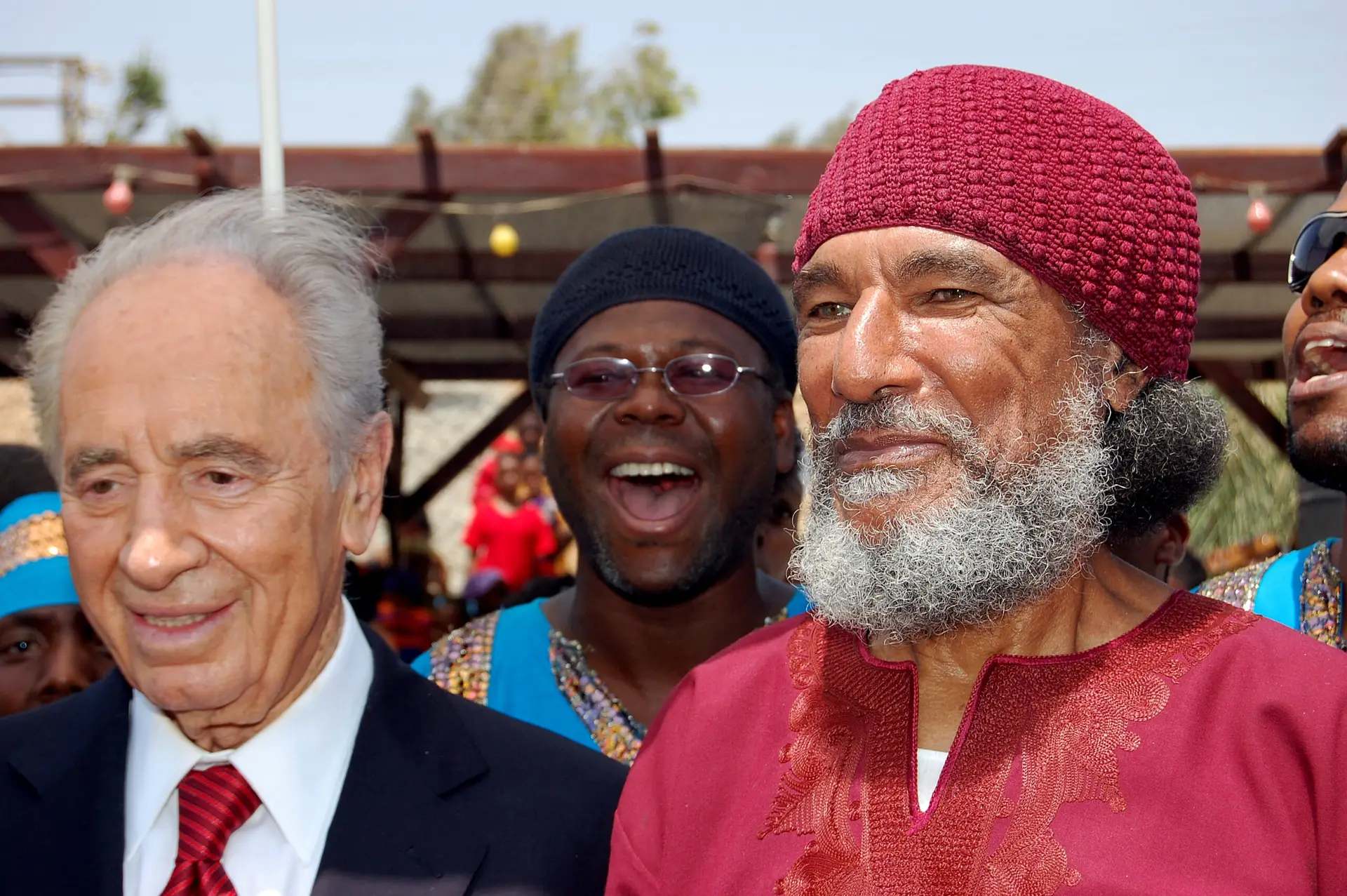
Shemariyah Ellis made a dramatic entrance into the world.
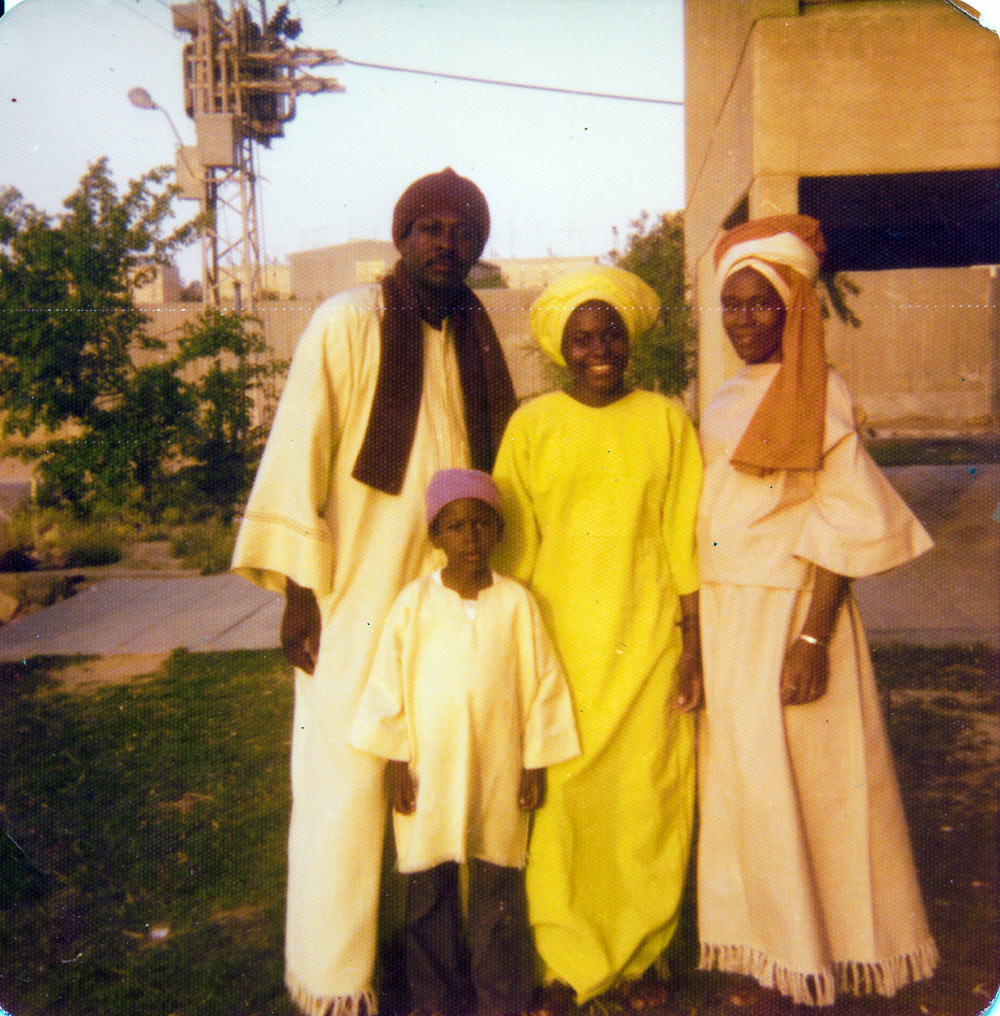
It was March of 1968, and his parents were part of a group of Hebrew Israelites who had immigrated from Chicago to Liberia the previous year. They were living deep in the “bush,” more than two hours from the closest hospital.
Late one night, Tehillah, wife of Elkanon, started having contractions and was loaded into the community’s car. As Nasik Gavriyah (formerly known as Nasik Gavriel HaGadol) recounts in his essential book “The Impregnable People: An Exodus of African Americans Back to Africa,” the car got a flat tire on the unpaved road to the highway. Tehillah was brought to a tent in the village, and women from the community who did not have medical training delivered her baby boy. She gave him the Hebrew name Shemariyah, meaning, appropriately, “one whom God has watched over.”
“They said I popped out on my head,” Shemariyah told me in 2008. “That was the beginning of me coming into this world.”
Ahk (“Brother”) Shemariayh was the first African Hebrew Israelite born “in the wilderness,” in the words of Nasik Gavriyah, and one of the first born outside of America. He made transition on March 17 after suffering a stroke caused by hypertension, according to his family. He was just 57.
Shemariyah lived in Dimona for most of his life and had many skills — he was an electrician, entrepreneur, singer, and “man of valor” in the Kingdom of Yah (KOY). He came from a formidable KOY family. His father, Nasik Elkanon, aka the General, was a pioneer and one of the community’s first “princes.” His mother, Aturah Tehillah, is a “crowned sister” who taught in the community school in Israel. And his sister, Aturah Cathrielah, is a crowned sister and talented photographer.
Shemariyah was also a friend of mine. We got to know each other in 2007-2008 when I lived in the Village of Peace, and we sang together in the New Jerusalem Fire Choir. He was a private person, but he allowed me to interview him for my research project on the KOY.
He was 2 when his family settled in Israel in 1970, and, like many Hebrews of his generation, he endured a very challenging childhood and young adulthood. He lived in the “Shikun” — Shechunat HaNitzachon, a neighborhood in Dimona — in a two-bedroom apartment occupied by up to 22 people at a time. He slept on a bedbug-infested mat on the floor and sometimes had to forage for food. “We were just trying to make it,” he told me.
He briefly attended an Israeli public school before the community founded its own school, the Kingdom School in Holiness, from which he graduated. At age 18, he was arrested with more than 40 other Hebrews in the middle of the night at an orange packing facility in Rehovot. They were charged with overstaying their visas and working without permits. Shemariyah spent about six months in prison in Beer Sheva, which tested him physically and mentally:
I remember that I was real angry. … I couldn’t believe that I was really locked up somewhere, so I didn’t speak to nobody for about three days. Three days I just laid up in the bed, just really trying to cope with what had taken place. Finally, Sar Bahkooryah came and said, ‘Shemariyah you’re going to have to knock it off. You’re supposed to be an example.’ And so I started to associate or whatever. In the meantime, we were vegans and so we didn’t eat a lot of stuff that they brought us. And we had to check our food and make sure they didn’t put no chicken in it, and no fish in it.
He was deported to New York, where he initially stayed with Hebrews from another camp, Ha’Aur B’Mizraim. He ended up spending seven years away from his family in the U.S. During this time, he took college classes in Chicago in English and math, then trained to become an electrician.
When he finally made it back to Israel — using a different name and passport — he studied to convert to Judaism so he could settle in the country legally. In the end, he decided not to go through with the conversion because he was opposed to undergoing a hatafat dam brit, the Jewish ritual where a drop of blood is drawn from an already circumcised man. “I really didn’t agree with that — that’s their initiation,” he said, making a distinction between Judaism and Hebrew Israelite culture.
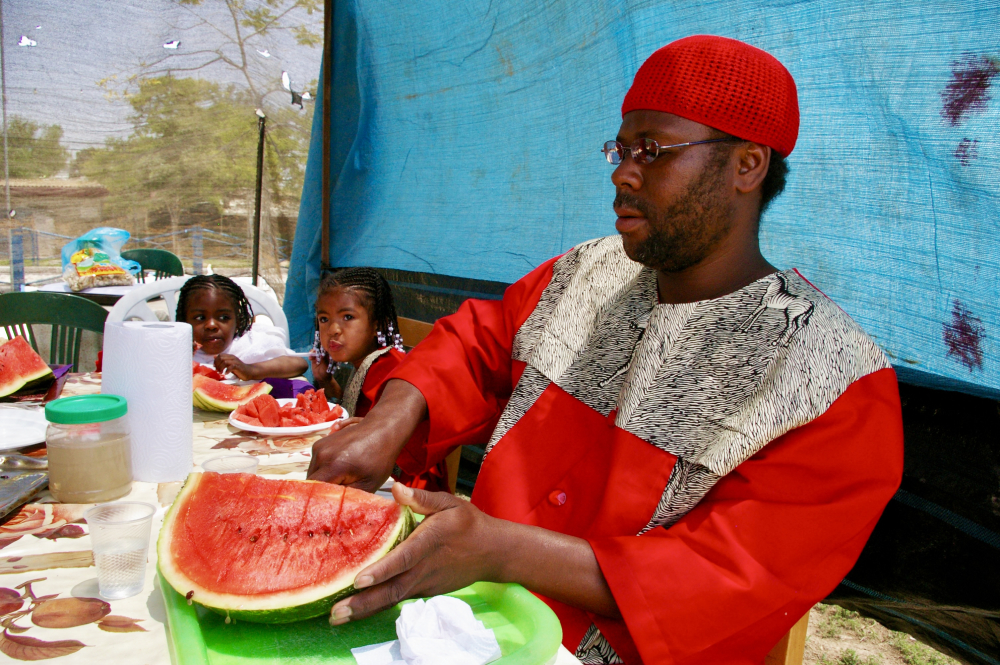
In the early 2000s, he was sent on assignment to Washington, D.C. to do electrical work at a KOY health complex. On January 17, 2002, his younger brother, Aharon, was performing as a singer at a bat mitzvah celebration in Hadera. A Palestinian terrorist burst into the banquet hall and murdered six people, including Aharon — the community’s first sabra, or native-born Israeli. Shemariyah was unable to attend the funeral because of his status issues in Israel.
Years later, his family received a settlement in a lawsuit Aharon’s widow brought against the Palestinian Authority in U.S. court. Shemariyah used some of the money to start a car rental company in Dimona called Wheels Global. (The company closed after a few years.) He also invested in other community projects.
When I interviewed Shemariyah in 2008, he did not have legal status in Israel, which limited his ability to work and travel. “I’ve been told that I was next on the list to go through the court procedure, but it’s just a matter of when,” he told me. Shockingly, when he died, he still had not received permanent residency status or citizenship, according to two of his friends.
I asked him what he thought about Ben Ammi Ben Israel z”l, the community’s spiritual leader:
I think that his leadership has been perfect. His timing has been perfect. … I remember him saying — to go back to my status thing — all you got to do is be here, and you will get what you need. He said that in a meeting, and from that day on, because I was at that time feeling a little frustrated, but when he said that, I was like, okay, cool, that’s what I’m gonna do. But I think his leadership has been great. … He’s tapped into a source that really no one has tapped into. And every year, something else is new, something else is more clear in our understanding.
Like his brother Aharon, Shemariyah was passionate about music. In addition to performing with the Fire Choir, he released one album of original music titled “Sacred Journey.” On the title track, he pays tribute to the many men and women who helped build the KOY. Another song, “Ahava” (“Love” in Hebrew), is about the need for “brotherly love” among Jews, Muslims, Christians, and Hebrews. The lyrics are in Hebrew, English, and Akan.
I asked him why he enjoyed singing:
It reaches a deep part of my soul, and I try to give what I’m feeling to someone else. … That’s one thing Nasik Rockameem told me: It might be one soul out there that needed to hear what you’re projecting, what you’re singing. That’s why it’s important to be in the right mind when you performing. It an’t just no performance like that. You’re actually healing. You’re healing people.
Ahk Shemariyah is survived by two wives, eight children, and seven grandchildren. May his memory be a blessing.
The Ellis family is raising money for funeral and other expenses. Please contribute if you can: https://www.gofundme.com/f/support-abba-shemariyahs-recovery-journey.
One Response
Shalom.,
I have many personal testimonials moment to share of me being with Shemariyah.
Shemariyah was my baby sitter.
I grew up living with him in the same home from a baby till age 7.
He would take me on bike rides with him for fun time.
We sang together in a brothers singing group in the village of peace in Dimona Israel.
We also sang together in the New Jerusalem fire choir.
I can say that shemariyah was a good father big brother and good friend too me.
May you rest in peace champ 🙏🏽.